
A Step-by-Step Guide to Designing Your Dream Wedding Dress
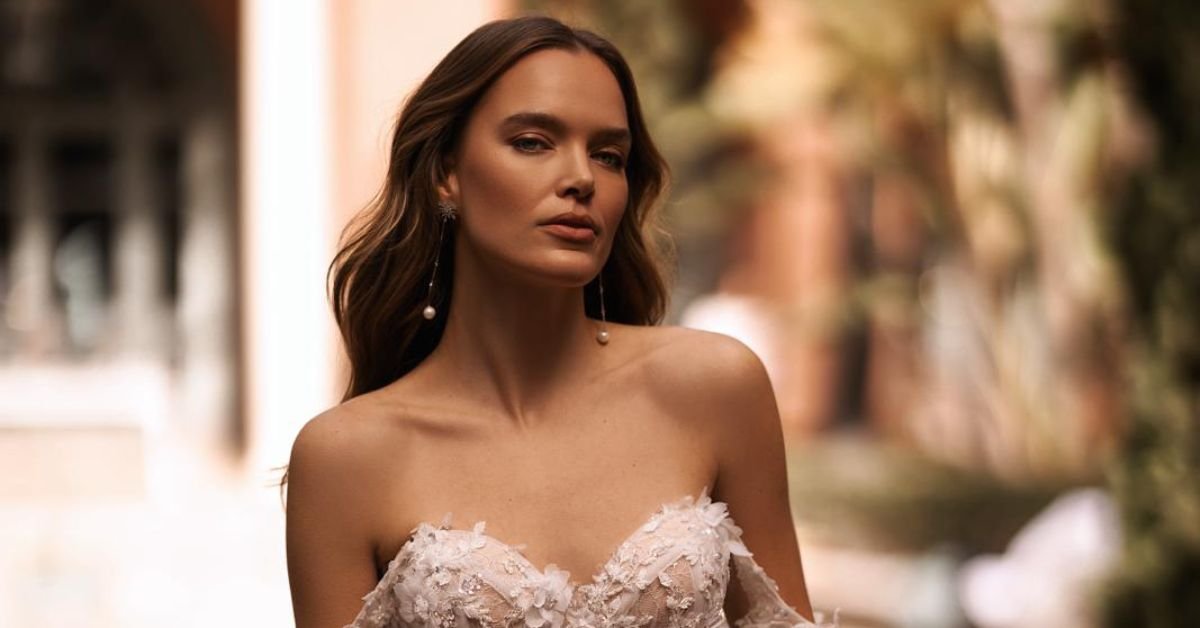
You have likely imagined your wedding dress long before you ever stepped into a bridal boutique. Designing it yourself takes that vision one step further, turning inspiration into something intentional and personal. When you approach the process with structure and clarity, each decision builds toward a gown that feels unmistakably yours. This guide to designing your dream wedding dress walks you through each stage, keeping you focused and confident.
Start With a Realistic Budget
Every design begins with numbers. Before selecting fabrics or sketching details, determine what you feel comfortable investing in your gown. A clear budget narrows your focus and allows you to make thoughtful decisions without second-guessing each choice.
When you set a price range, you should Include more than the base cost of the gown. Factor in premium fabrics, hand-applied embellishments, structural elements like corsetry, and multiple fittings. By accounting for these elements early, you avoid having to scale back later.
A defined budget also strengthens decision-making on customization. If you know where you can invest more, you can prioritize the elements that matter most, whether that means intricate lace, dramatic volume, or a statement train.
Define Your Wedding Day Vision
Your gown should align with the tone of your celebration. A grand ballroom setting invites structure and drama, while an outdoor garden ceremony pairs beautifully with softness and movement. When your dress complements the environment, the entire look feels cohesive.
Consider the season as well. Heavier fabrics like satin support cooler months, while lighter materials allow comfort in warmer temperatures. For example, formal evening weddings often call for refined silhouettes, while daytime ceremonies allow more relaxed elegance.
Once you define the mood of your wedding, your design choices become clearer. Instead of debating every trend, you can filter ideas through the lens of your setting and aesthetic.
Understand Your Body Shape and Proportions
Designing a gown requires an understanding of your physical proportion. When you recognize how silhouettes interact with your natural shape, you create balance and highlight your favorite features.
Every silhouette enhances different proportions that we’ve detailed below:
A-line: Defines the waist and gently flares for balanced elegance
Ball gown: Creates dramatic volume and emphasizes a smaller waist
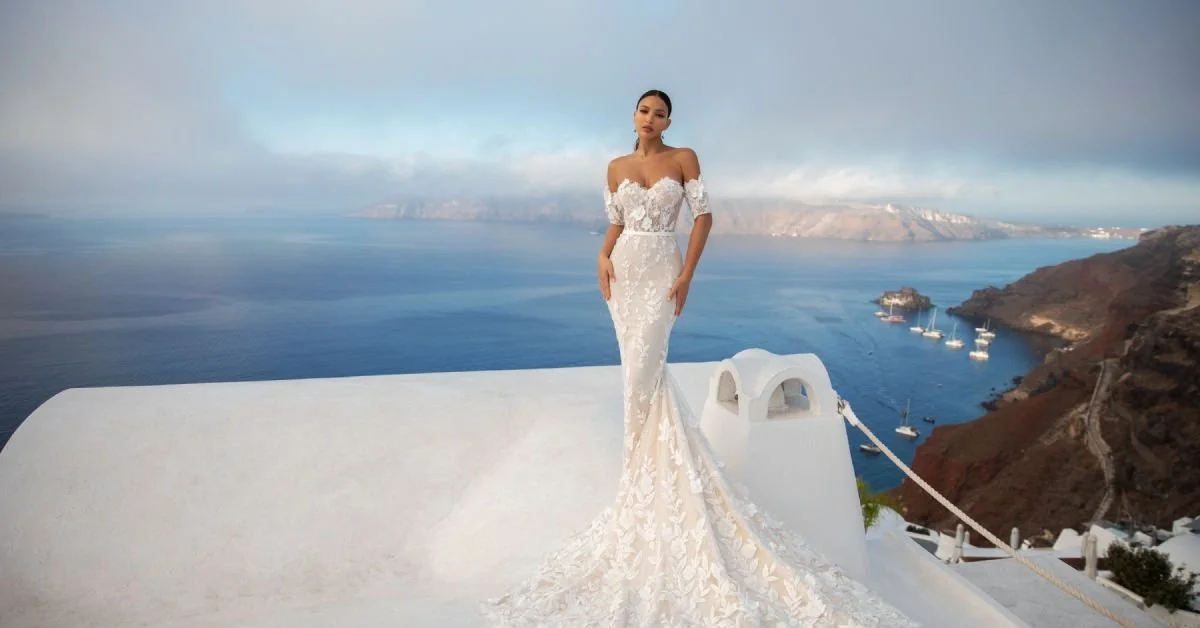
Mermaid: Highlights curves and creates a sculpted look
Sheath: Follows natural lines for a sleek, elongated effect
Fit-and-flare: Combines structure and movement for soft definition
Knowing the different options allows you to design strategically. Instead of choosing a shape based only on photos, you select a silhouette that supports both comfort and confidence.
Choosing the Right Silhouette
The silhouette determines how fabric drapes, how the train flows, and how the bodice supports you throughout the day. While ball gowns tend to look structured yet flowy, sheath gowns have a sleek and modern look.
Gather Focused Inspiration
Inspiration helps you articulate your ideas clearly. Rather than collecting dozens of unrelated gowns, focus on consistent elements you feel drawn to. When patterns emerge, your personal style becomes easier to define.
Pay attention to specific details that we’ve listed below:
Neckline shapes
Sleeve lengths
Back designs
Fabric textures
Levels of embellishment
Once you narrow your inspiration, you avoid blending too many ideas into one design. A cohesive vision always feels stronger than a collection of competing trends.
When the shape feels right, every additional detail enhances rather than competes with it.
Select Fabrics That Bring the Design to Life
Fabric influences both visual impact and physical comfort. The same silhouette can transform completely depending on the material choice, making this decision essential in the customization process.
Here are some of the most popular materials that brides choose.
Satin
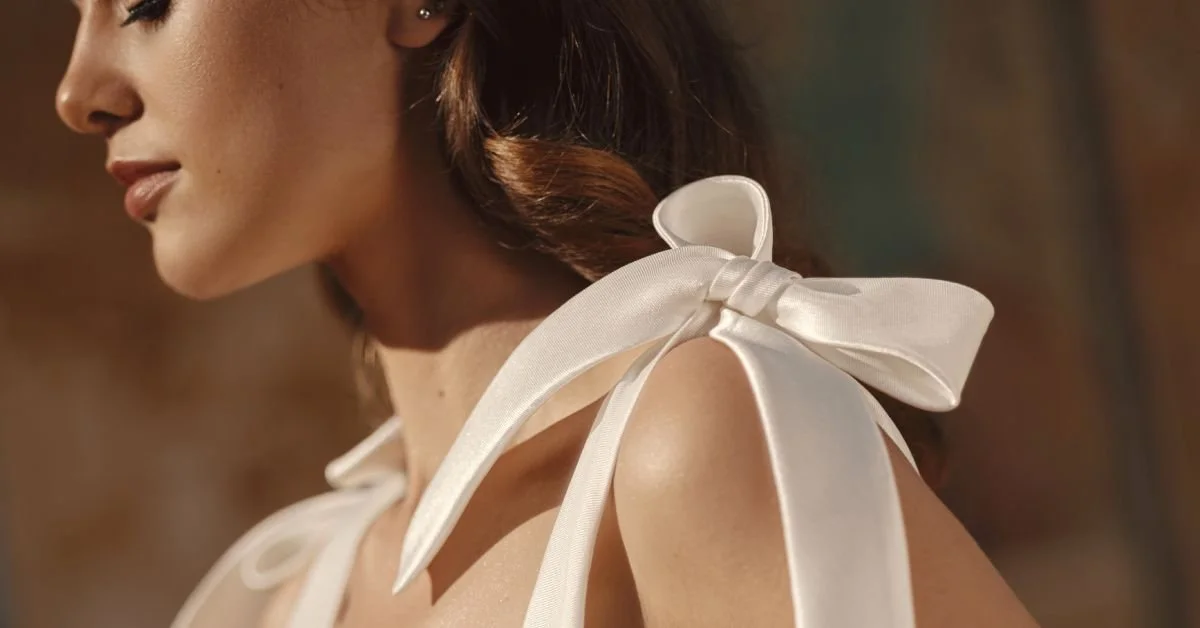
Satin offers structure and sheen. It holds its shape beautifully, making it ideal for ball gowns or structured A-line designs. Satin photographs elegantly under both natural and indoor lighting, which gives the gown a timeless finish.
Bridal Tip
Since satin fabrics have weight, it also provides stability and clean lines. Brides who want a polished, classic look often gravitate toward this fabric.
Crepe
Crepe delivers a modern, minimalist feel. It drapes close to the body without adding excess volume, which works well for sheath and fit-and-flare silhouettes. Its smooth surface allows architectural lines and subtle tailoring details to stand out.
Bridal Tip
Crepe also feels lightweight and breathable, which supports comfort during long celebrations. Brides who prefer understated elegance often choose this fabric.
Lace
Lace introduces texture and romance. Designers layer lace over structured bases to create depth and dimension. Patterns range from delicate floral motifs to bold geometric designs, allowing significant variation in style.
Bridal Tip
Lace pairs beautifully with customization, as designers can strategically place appliqués to accentuate curves or soften transitions between the bodice and skirt.
Design the Bodice Details
The bodice frames your face and anchors the entire design. Small refinements in this area can dramatically change the gown’s personality.
Choose a neckline that complements your features and supports your vision. A square neckline feels structured and modern, while a sweetheart neckline adds softness. Off-the-shoulder sleeves introduce romance, and clean straps create tailored simplicity.
Internal construction matters just as much as outward appearance. Corsetry, boning, and built-in cups provide support and shape. When the bodice fits securely, you move confidently without constant adjustment.
Add Signature Elements
Custom elements transform a beautiful dress into something that feels deeply individual. Consider the following features when designing your wedding gown:
Hand-sewn beading
Illusion backs
Covered button closures
Detachable overskirts
Custom train length
Each addition should serve the overall design rather than distract from it. When every element works together, the dress feels intentional and refined.
Plan for Fittings and Final Refinement
Our guide to designing your dream wedding gown would be incomplete if we didn’t highlight the importance of dress fittings to ensure your dress gown fits perfectly. During each appointment, move naturally. Sit, walk, and turn to confirm that the gown supports you comfortably. Final refinements, such as hemming, bustle placement, and strap adjustments, complete the design process.
Begin Your Design Journey at Hanan’s Bridal
Designing your gown should feel collaborative and inspiring from start to finish. At Hanan’s Bridal in Roswell, GA, our team guides brides through every stage of the process, from silhouette selection to final fittings. We take time to understand your vision and refine each detail with care.
If you’re ready to create a custom wedding dress that reflects your personality and fits beautifully, schedule your appointment with Hanan’s Bridal today. Your dream gown begins with intentional design and expert guidance.
